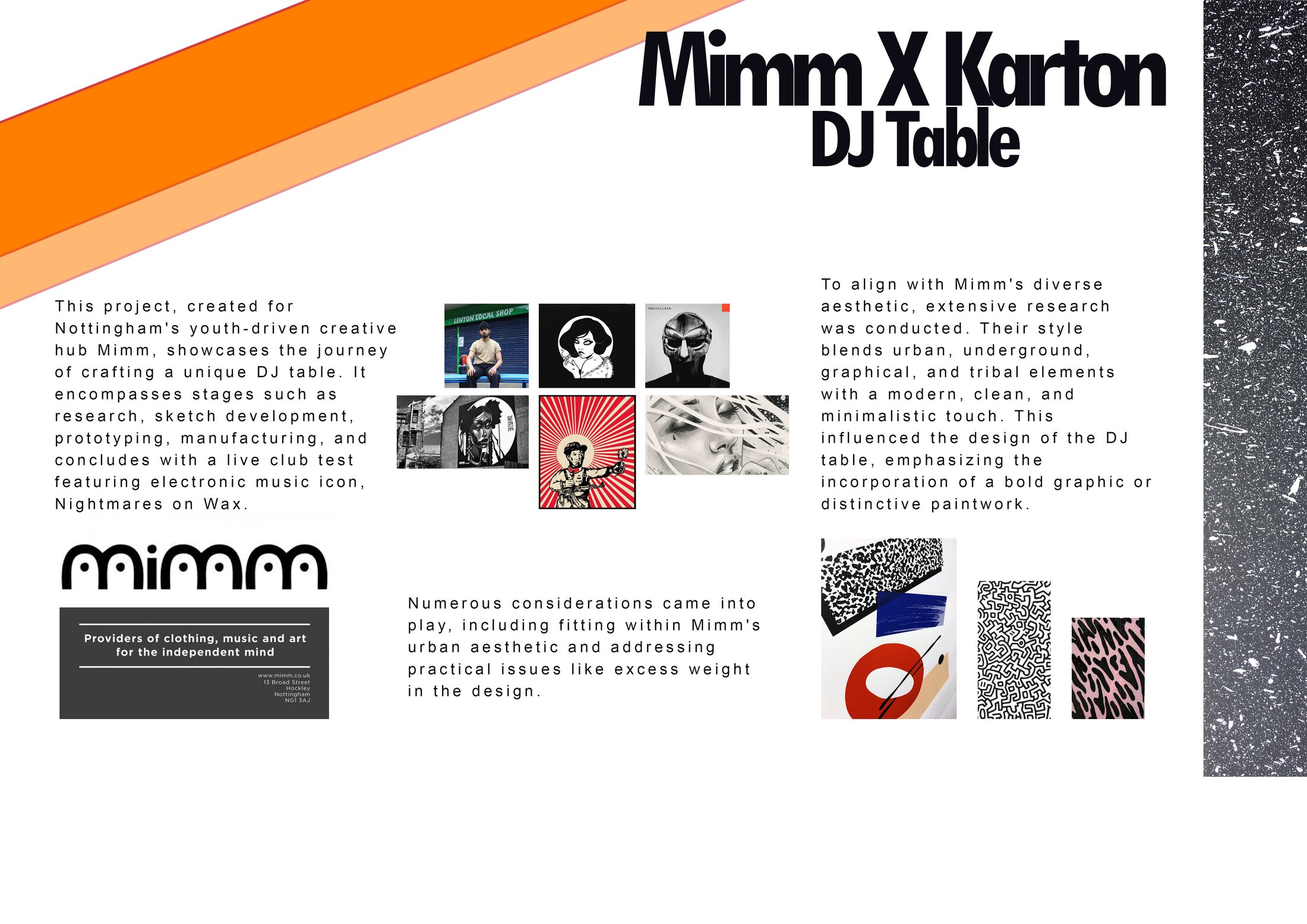
A custom DJ table for Mimm, a creative collective and retail space in Nottingham. Researched, modelled at 1:1, built, then tested in front of an actual club crowd, which is a nerve-wracking way to find out whether you got it right. I DJ, so I was designing for myself as much as for them.
Research. Mimm's look pulls from urban, underground, graphical and tribal references, but keeps everything clean and minimal. That shaped the brief early on. The table needed real graphic presence, while also being light enough for one person to shift and tidy enough to hide a nest of cables.
Those two things fight each other, and the practical one has to win. A table that looks incredible but takes three people to move at 2am is a table nobody uses twice.
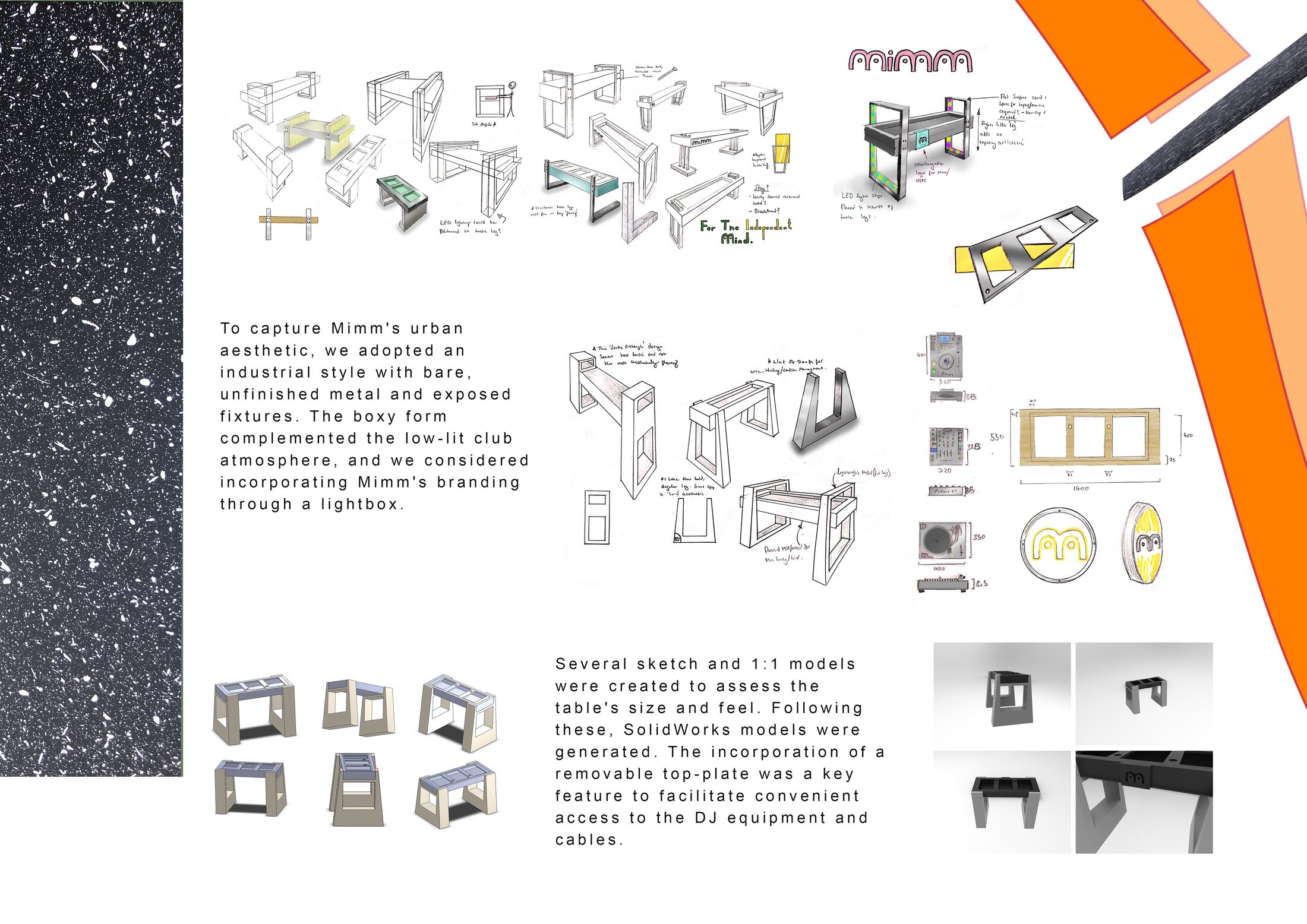
Design & construction. To match Mimm's industrial edge I went boxy, in bare unfinished metal with the fixtures left on show, which suits a dark room. I looked at a lightbox early on as a way of carrying their branding. Sketches and 1:1 models sorted out size and feel before anything went near SolidWorks, including a removable top-plate so you can get at the kit and the cabling without taking the whole thing apart.
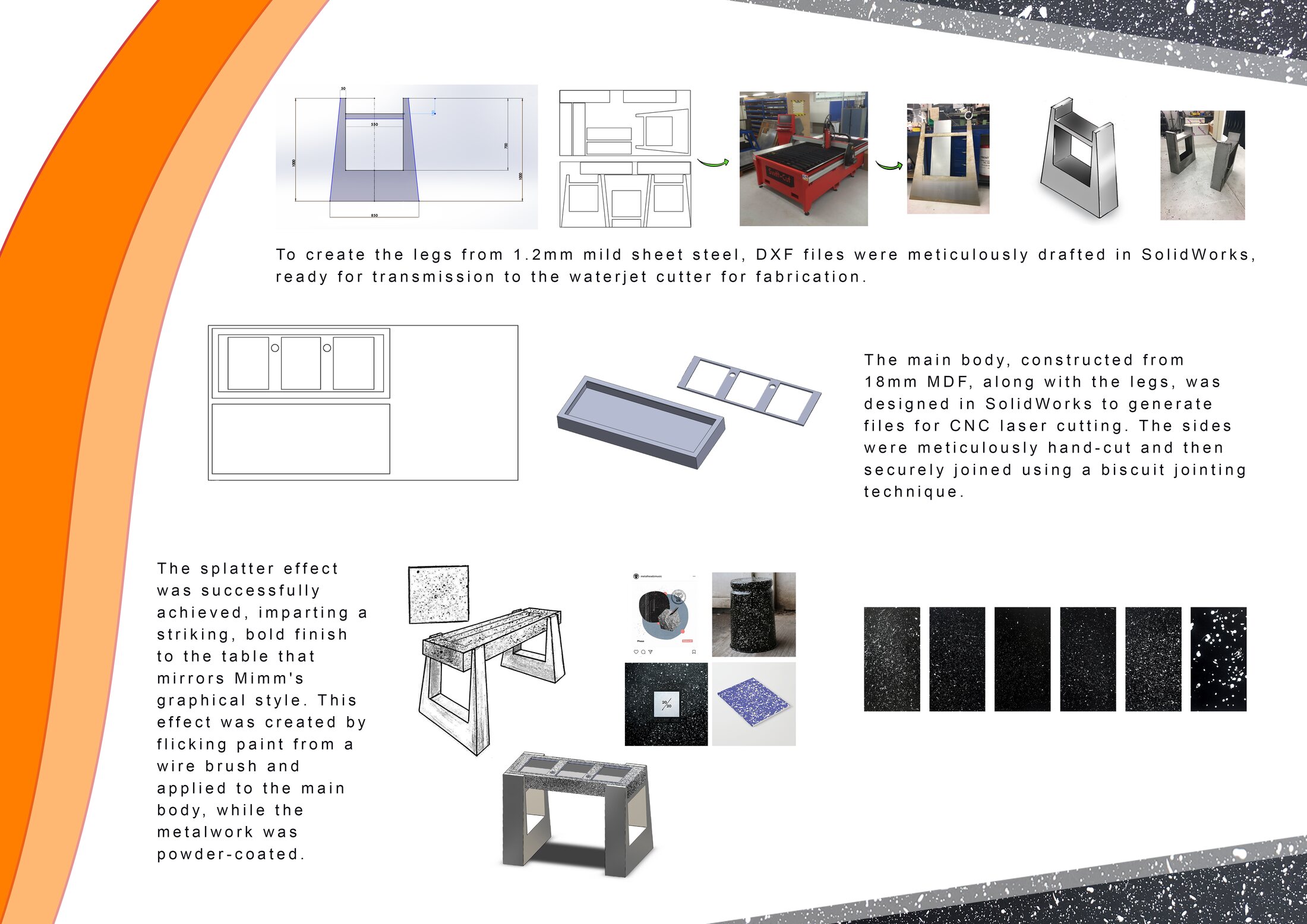
Fabrication. The legs came out of 1.2mm mild sheet steel, drafted as DXFs in SolidWorks and sent off to a waterjet cutter. The body is 18mm MDF, laser-cut and hand-joined with biscuit joints. The finish is paint flicked off a wire brush, which is as fun as it sounds and took a few attempts to get right. The legs were powder-coated on the assumption they'd get kicked.
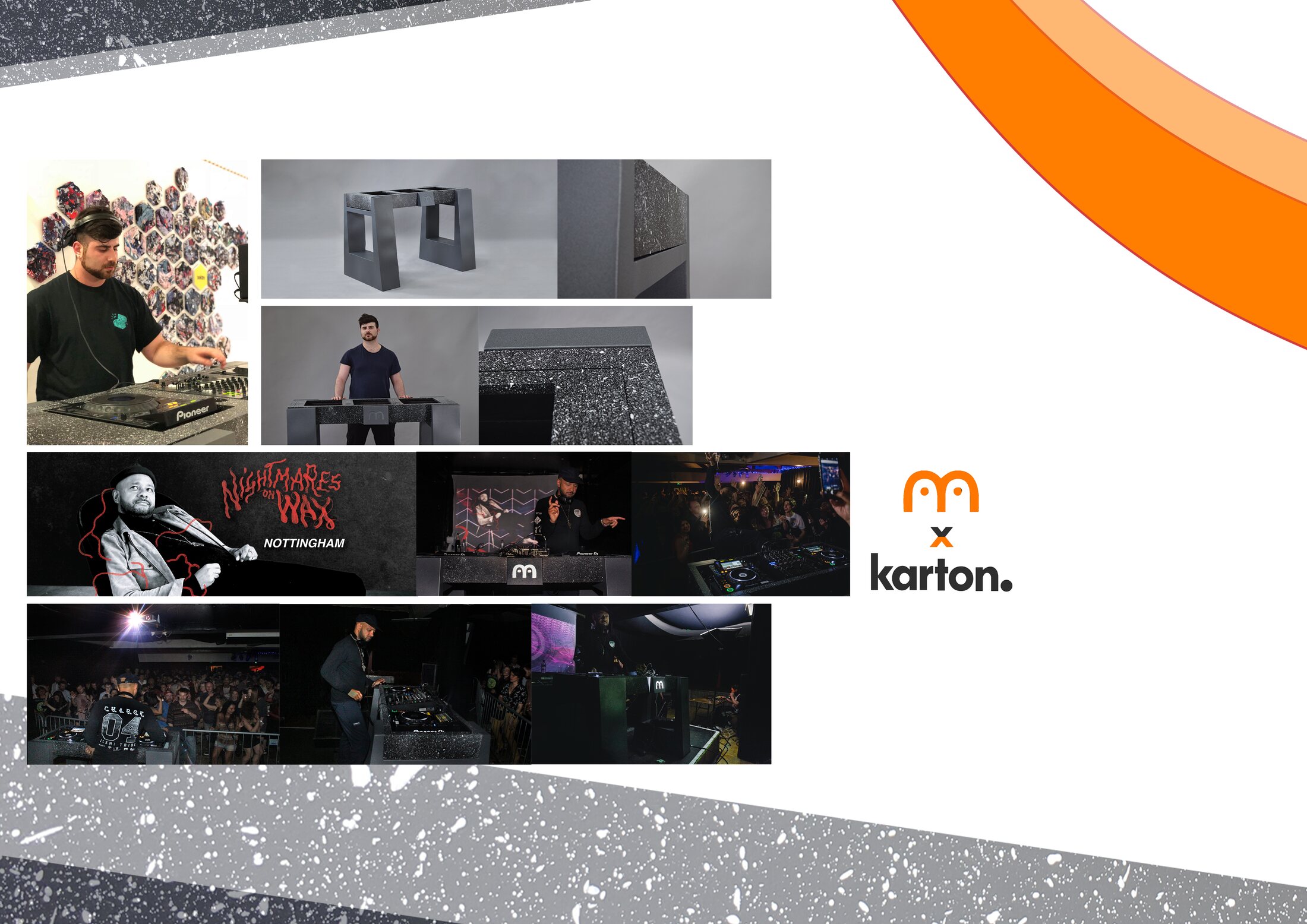
Testing. The 1:1 models existed to check height and reach against real equipment before anything was cut. The club night was the test that counted. Kit on top, crowd in front, no chance to quietly fix anything. Being a DJ meant I knew what to watch for: whether the height still works when you've been stood at it for two hours, and whether the cabling stays put once people start moving around.
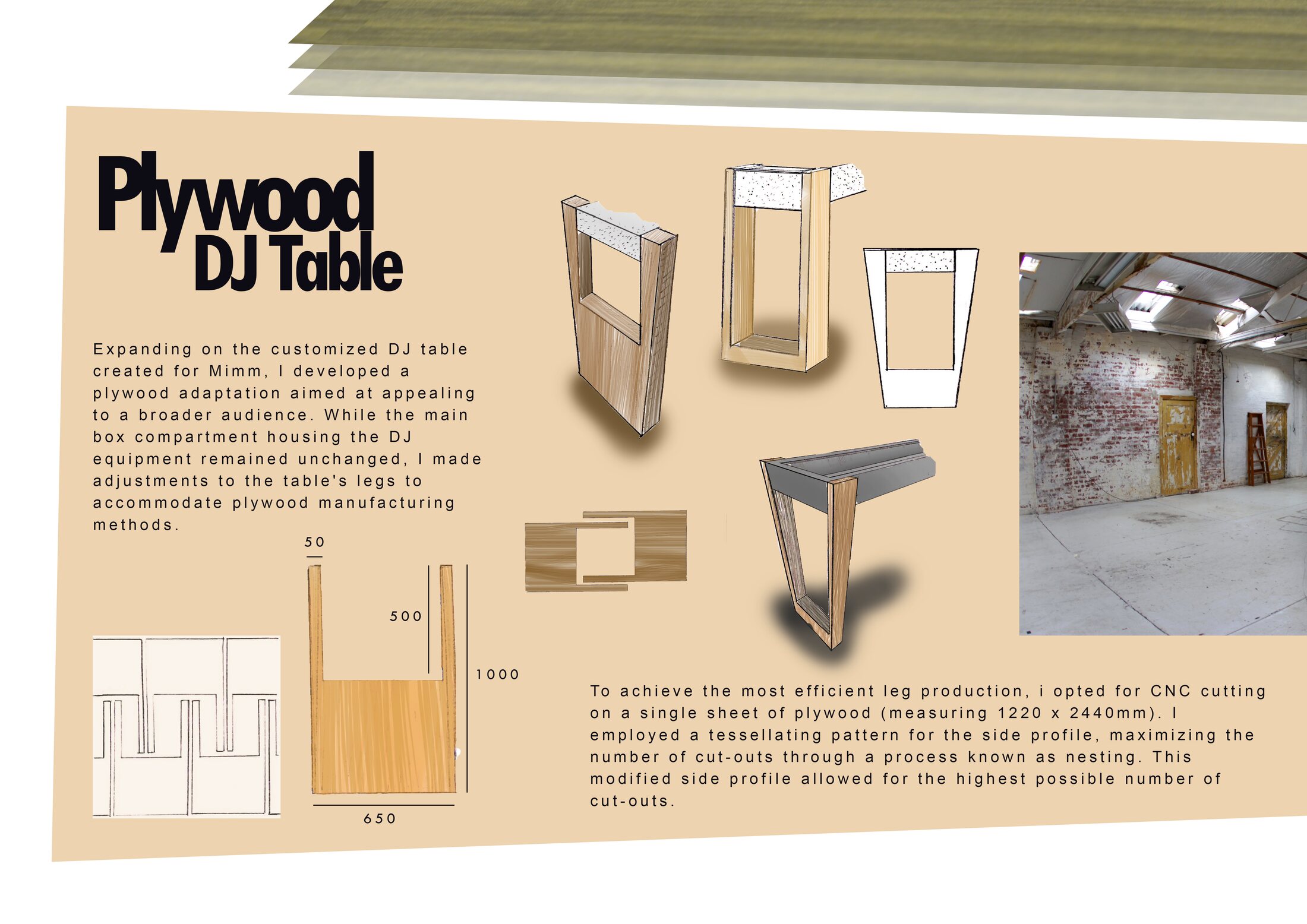
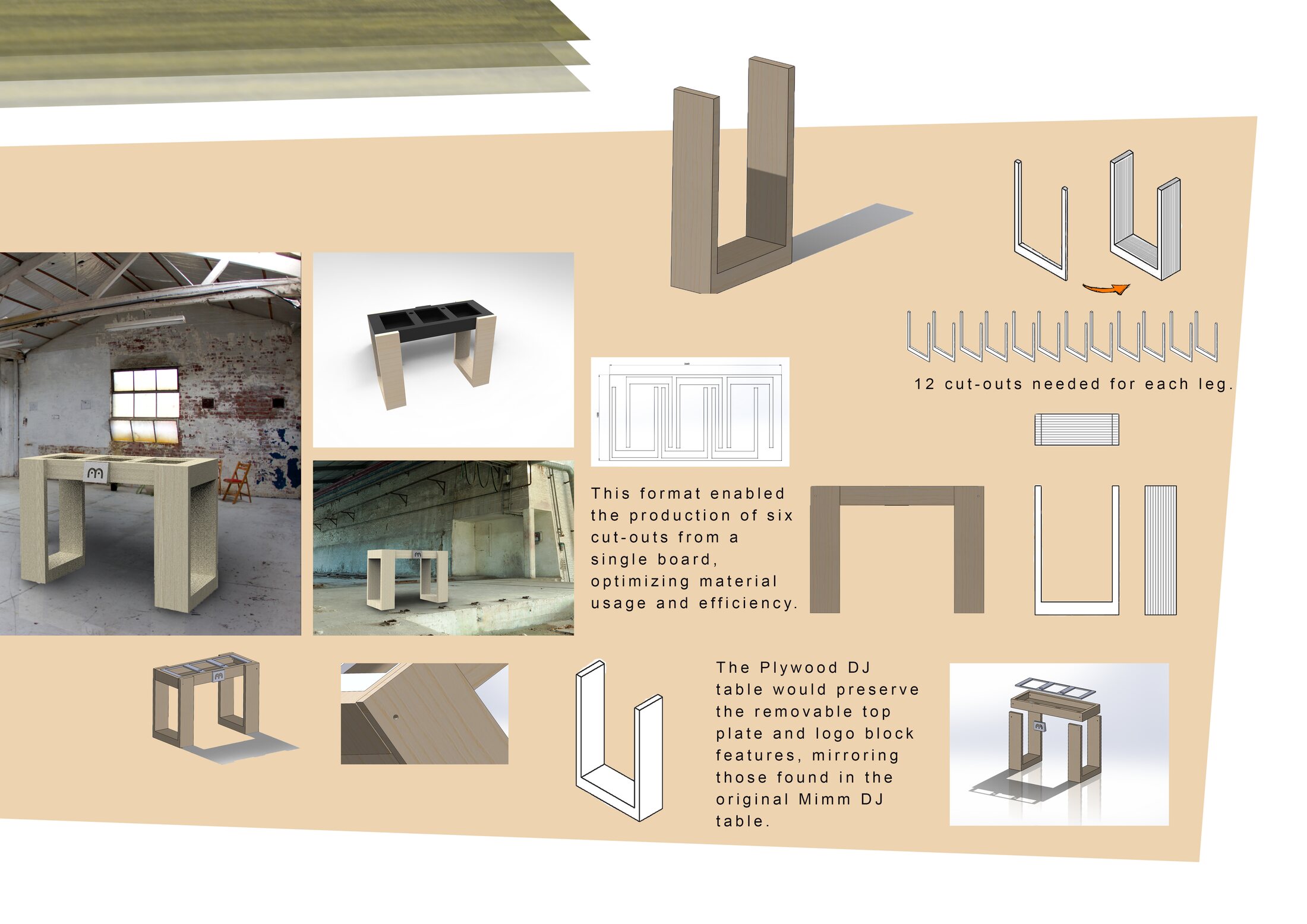
Plywood adaptation. I wanted the design to reach further than one club, so I worked up a plywood version. Same equipment housing, same removable top-plate and logo block, but the legs redrawn for plywood. I nested the leg profile so twelve cut-outs tessellate into a single 1220×2440mm sheet, which gets you six full sets of legs per board. Getting that up from four felt like a bigger victory than it probably was.