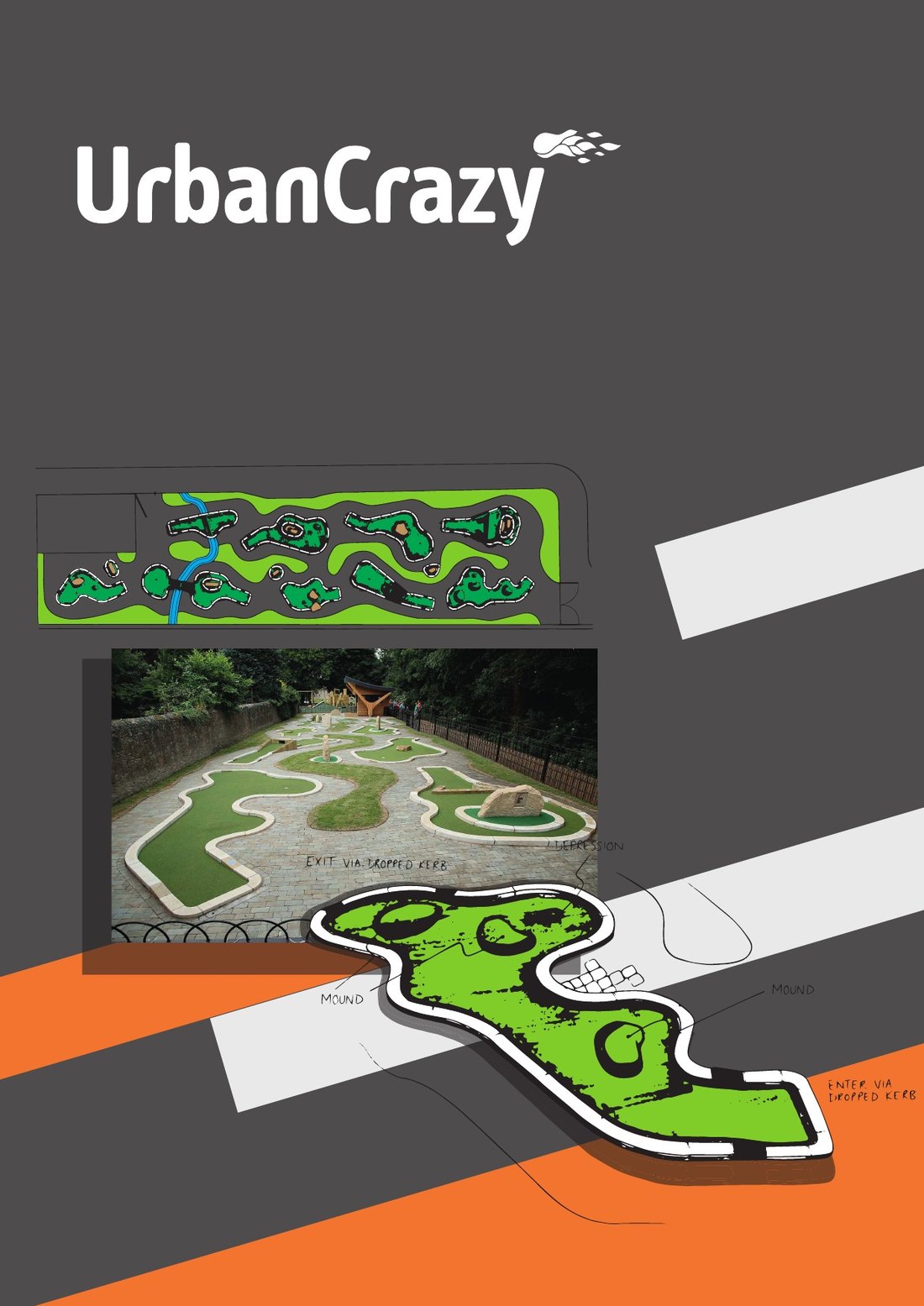

Course design was only half the job at UrbanCrazy. The other half was graphic design, building out the brand's print presence as a one-stop shop for all things mini golf.
The sales side. Winning the course-design work needed print that persuaded rather than listed. A presentation folder and a short-form brochure, both built on the charcoal-and-orange system, both aimed at a client who hadn't decided yet.
The folder was die-cut with an internal pocket, so quotes, site plans and course renders could be dropped in loose and tailored per client. That meant the printed shell could stay general while the insert did the specific work, so a single print run covered every pitch. Cheaper for the company, and a lot less for me to redo every time a quote changed.
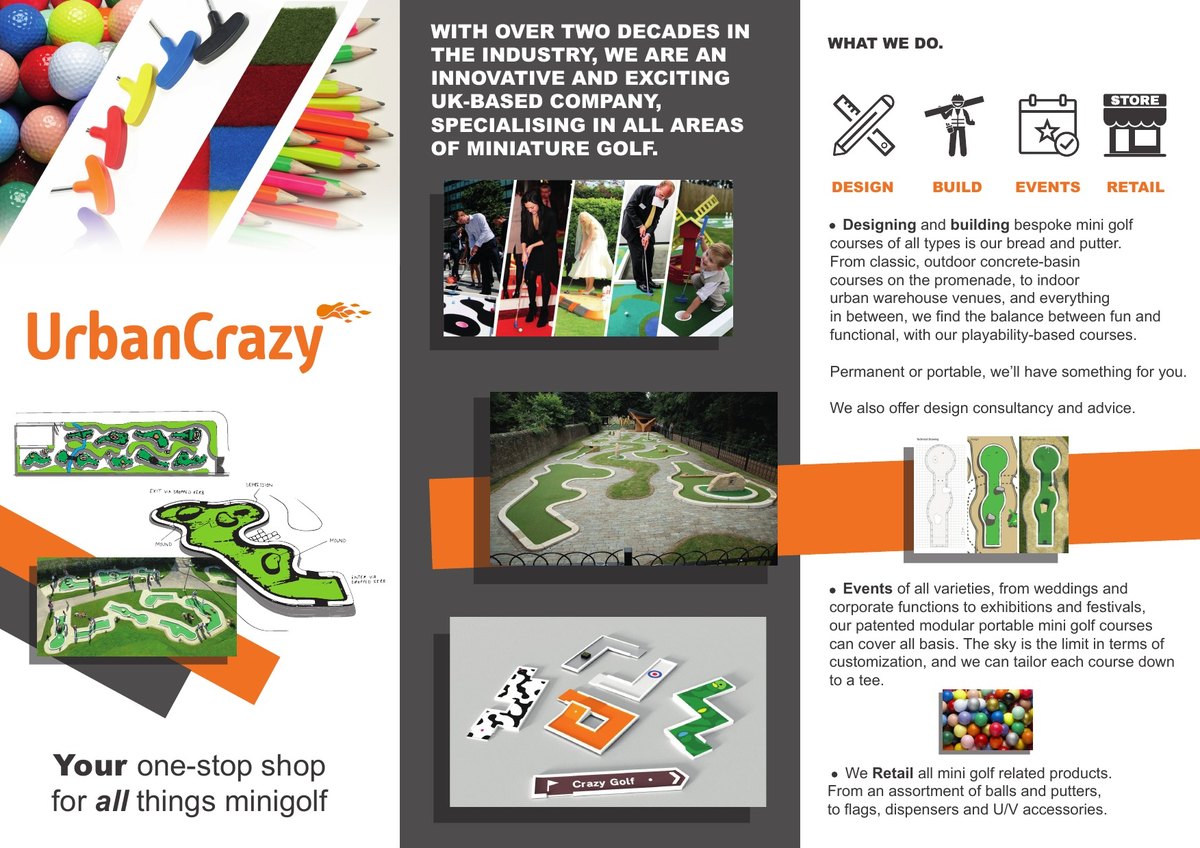
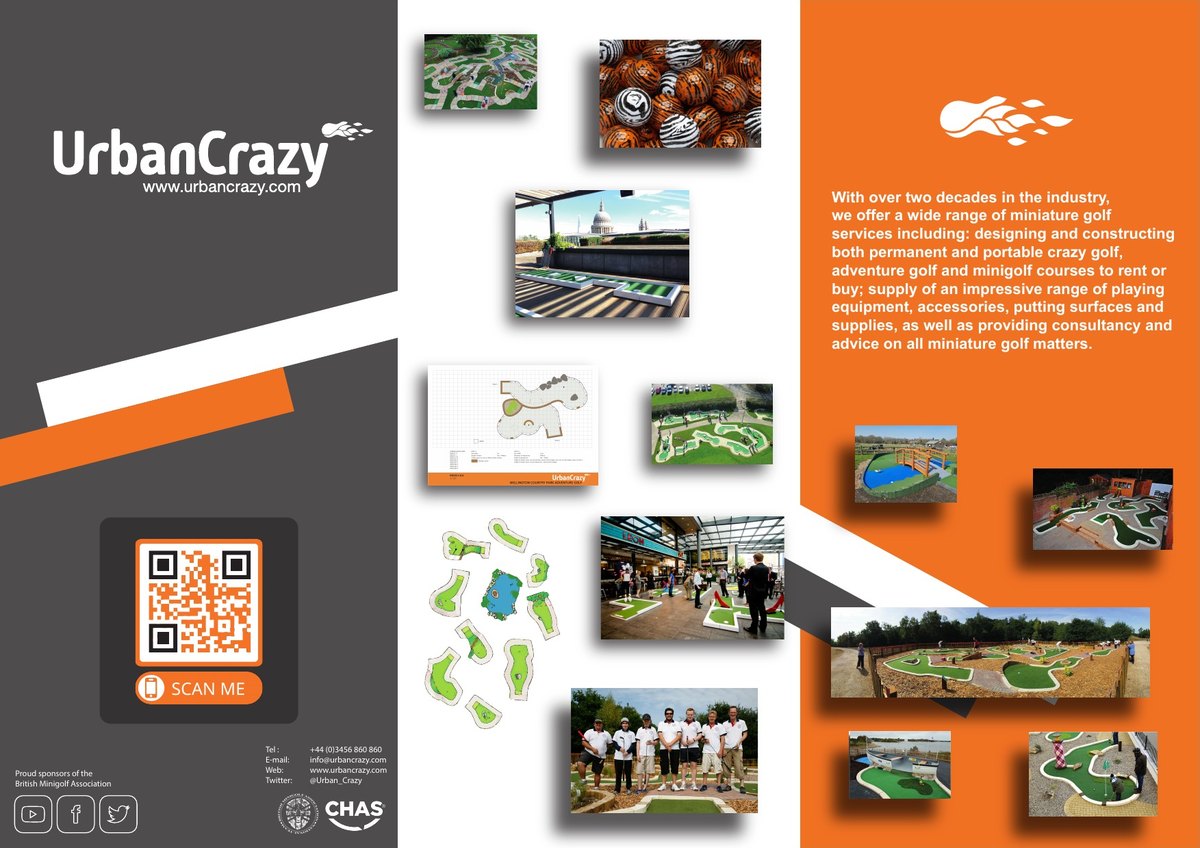
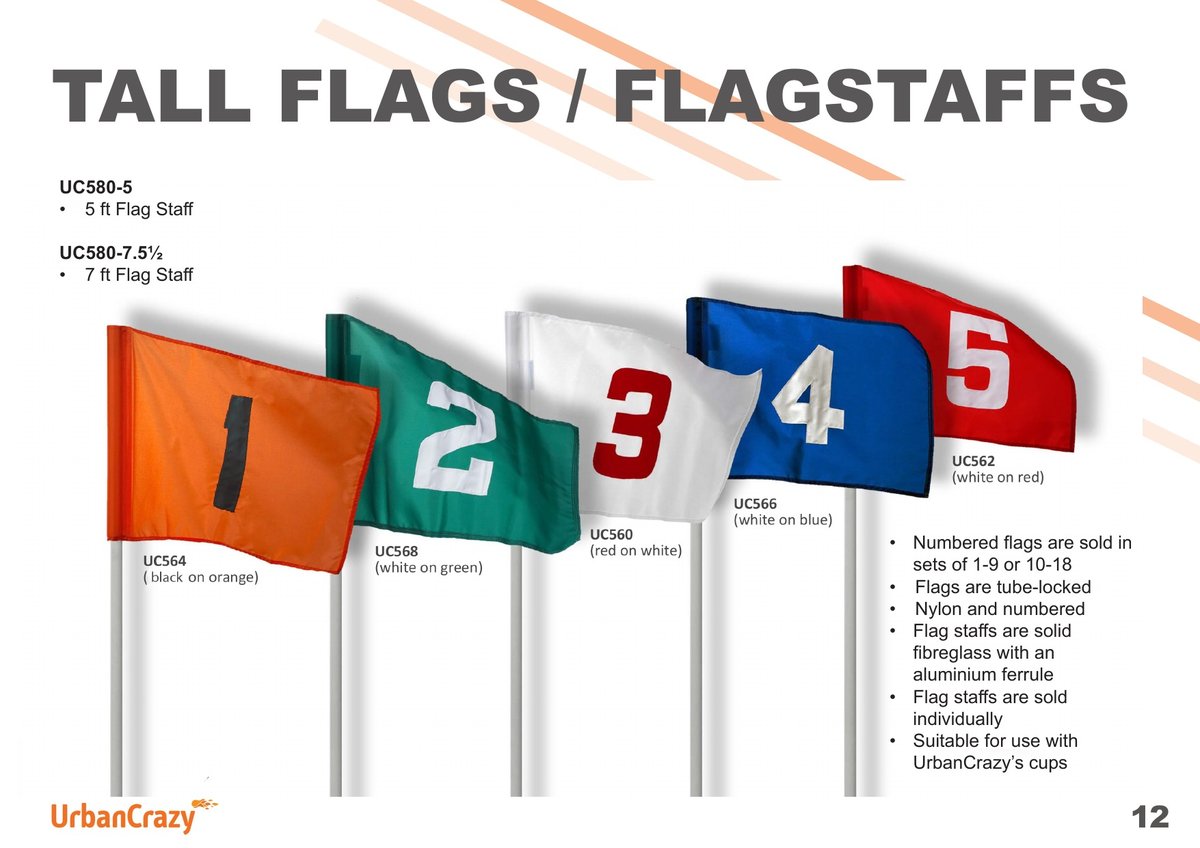
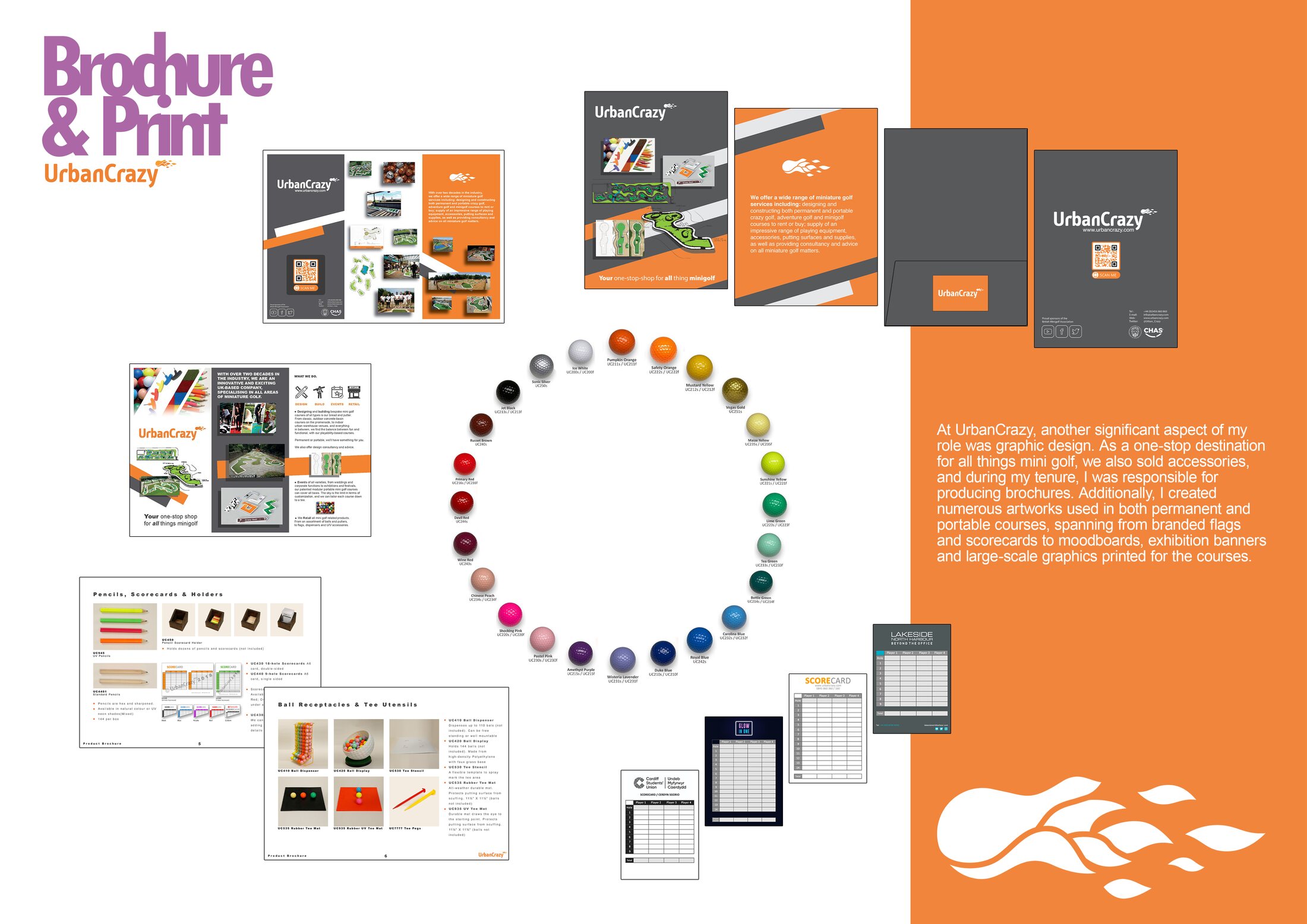
The product side. UrbanCrazy sold accessories as well as designing courses, and I produced the brochures that sat across both sides of the business. That meant artwork used across permanent and portable courses alike: branded flags and scorecards, moodboards for client pitches, exhibition banners, and the large-scale printed graphics installed on site. If it was printed and had our name on it, it usually came through me.
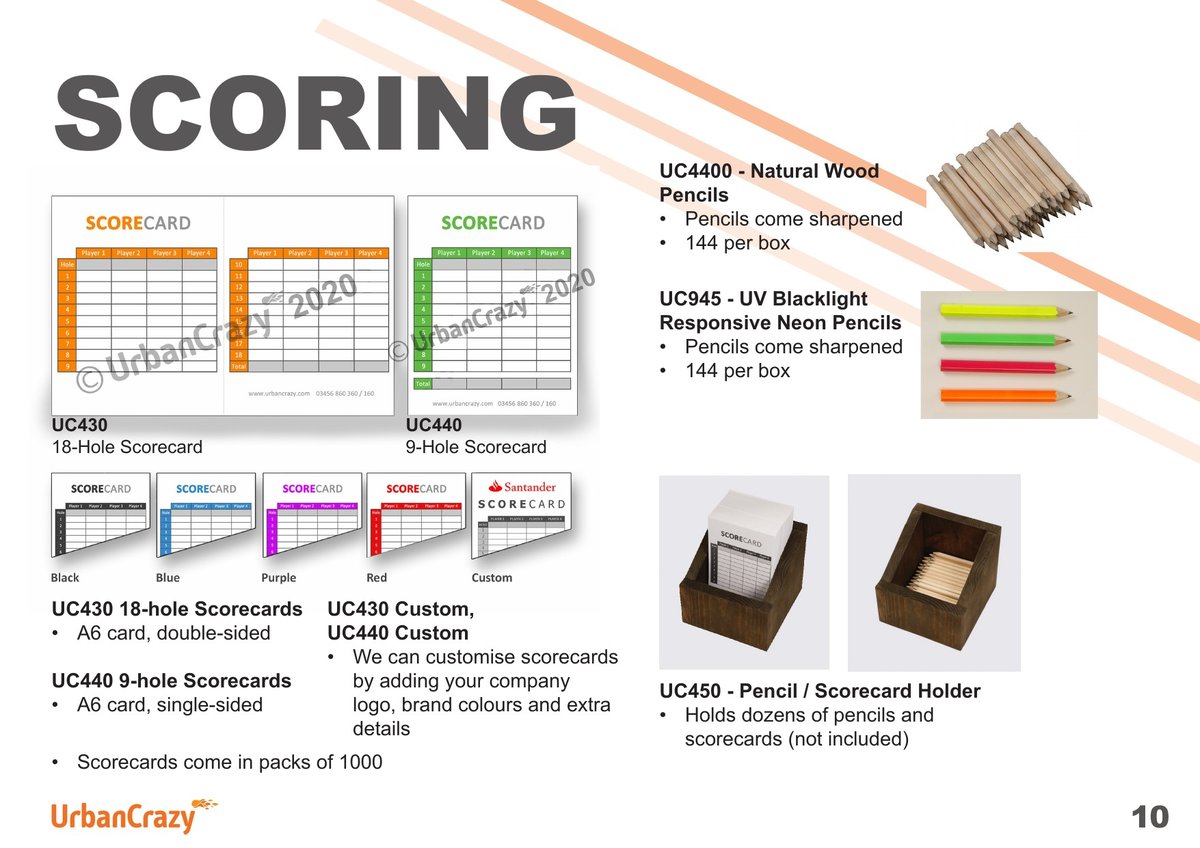
On the product side I did packaging and instructional artwork for the accessories range: pencils, scorecards and holders, ball receptacles, tee utensils. Not the glamorous end of design, but a brand lives or dies on whether the boring bits match.
The 2020 equipment brochure ran to eighteen pages: putters, balls, scoring, receptacles, flags, cups, tee mats and carpet, each product photographed, coded and specified. Every page had to work as a sales piece and an order form at the same time, which is a harder ask than it sounds.
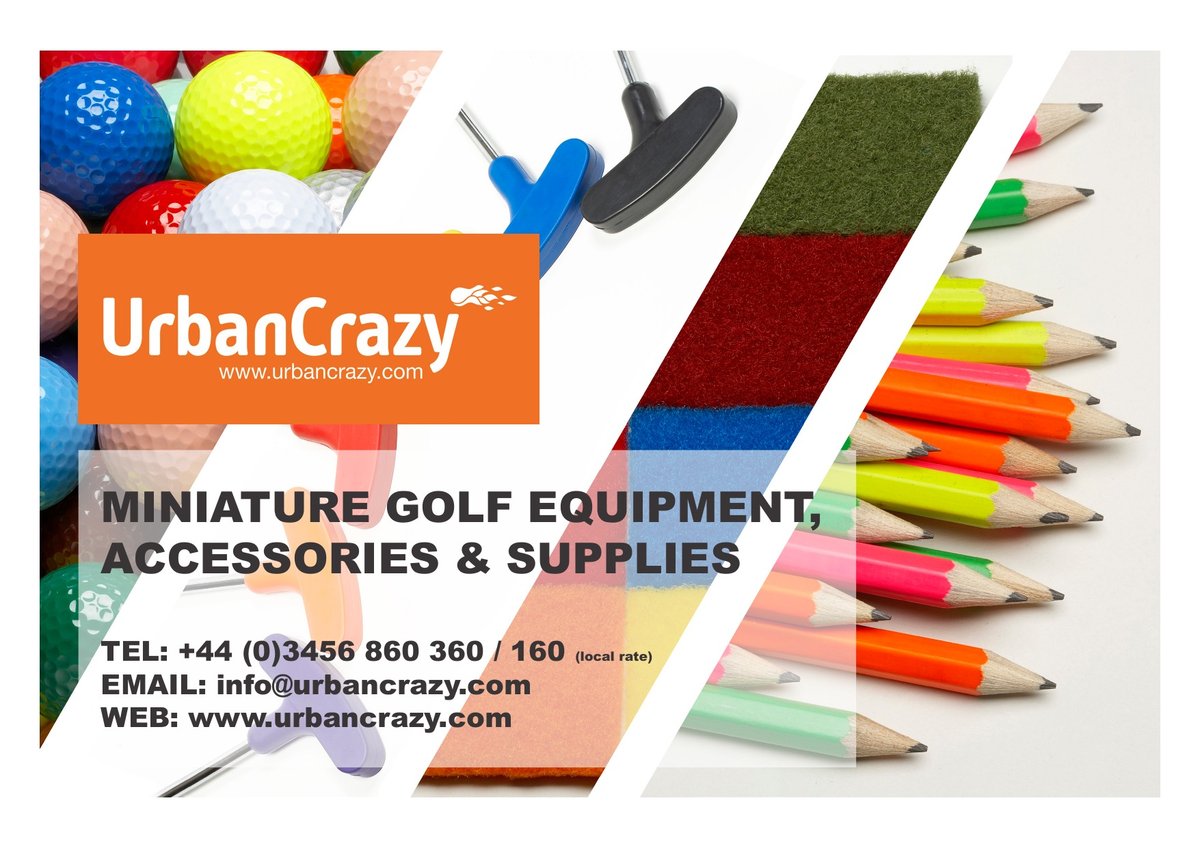
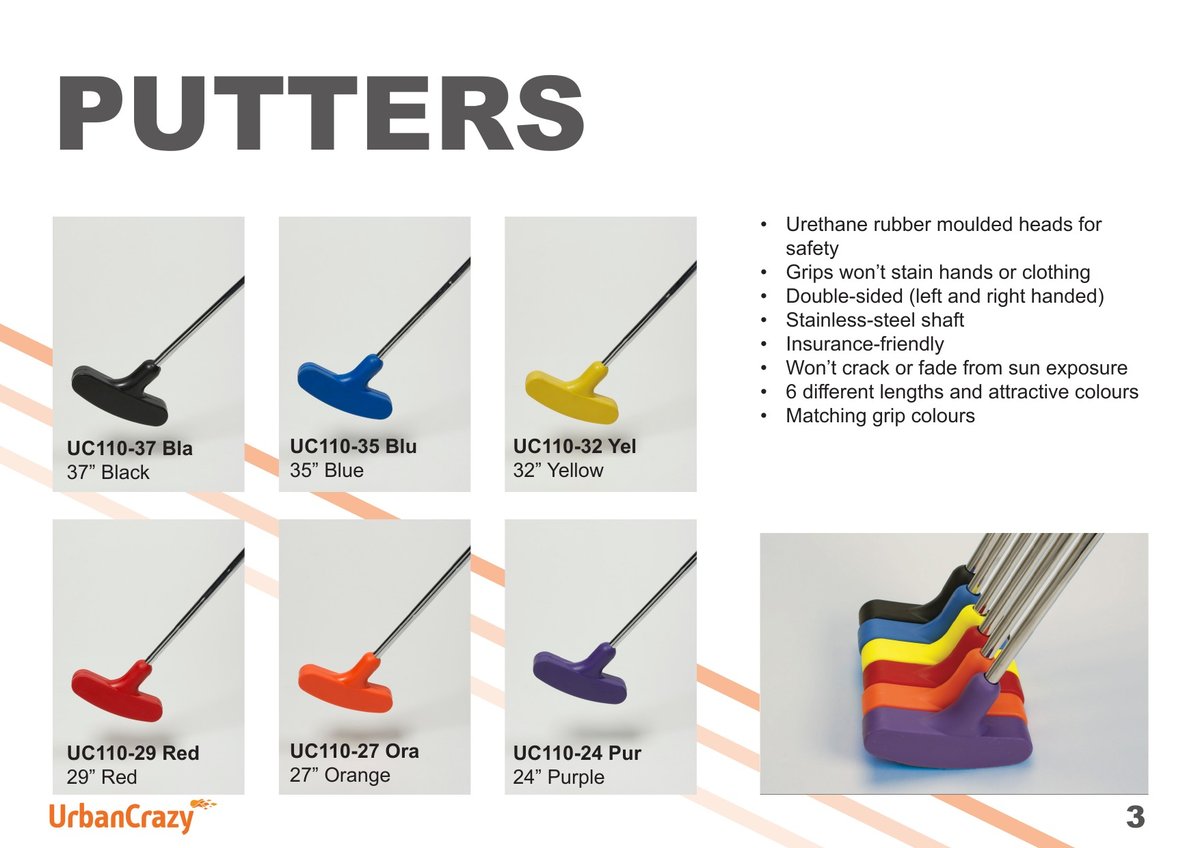
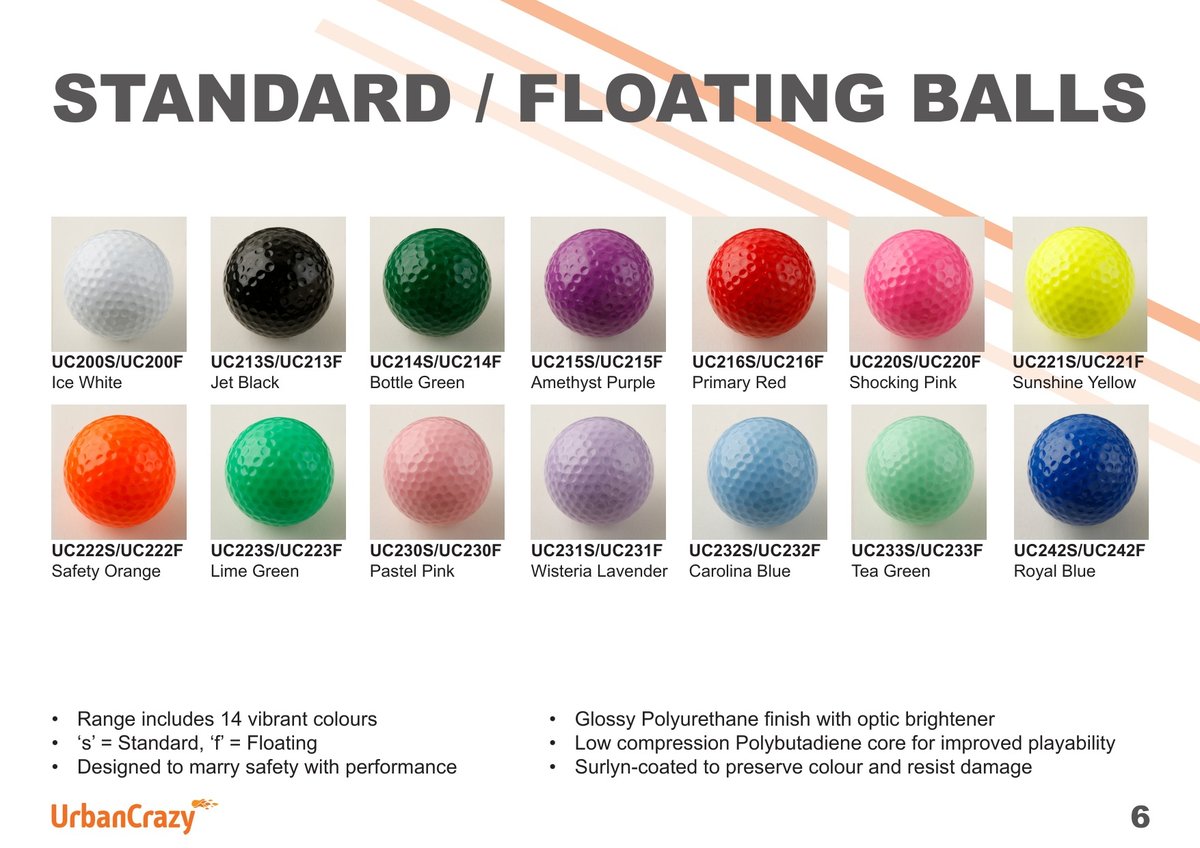
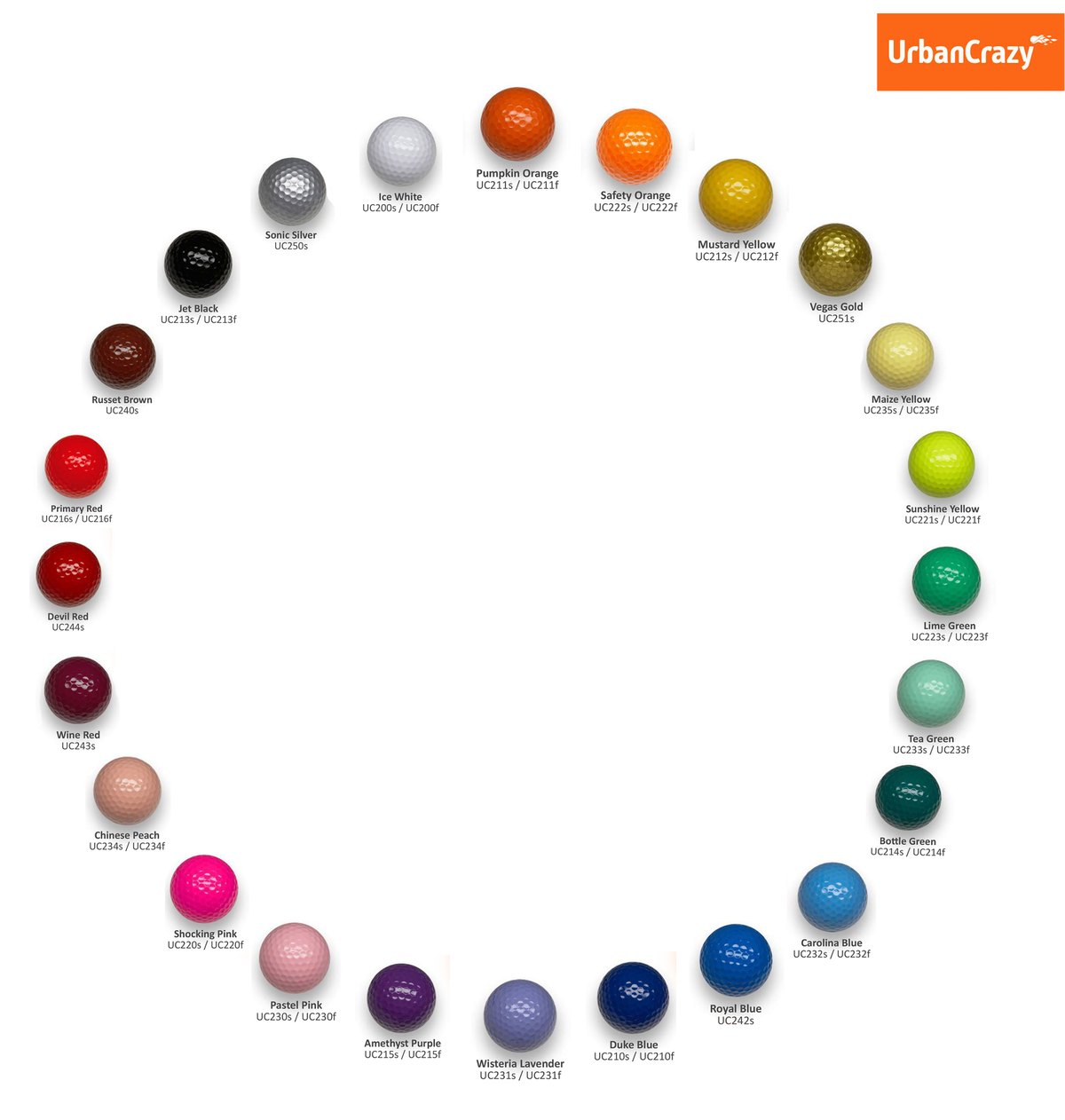
The accessories range needed its own treatment. Every product was photographed, coded and laid out to a consistent grid, from pencils and scorecard holders through to ball dispensers, tee stencils and mats, so the trade brochure could double as an order form.
Scorecards were the piece that got reprinted most. Every venue needed its own, co-branded with the site or the client. The layout had to survive being rebuilt dozens of times in different colourways without losing the UrbanCrazy system underneath. I've rebuilt that template more times than anything else I've made.